When confronted with the notion of ‘no utilities’ most people panic and picture the chaos of a war-torn country.
How Could anyone today live without utilities?
That’s impossible…isn’t it?
For most of human history, people lived without the utilities we know today. By the time we decided to go ‘back to the land’ in the 1980s, a lot of ‘conveniences’ had already been invented.
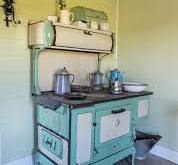
Enter the wood burning cookstove! These iron majesties were not named ‘Queen of the Hearth’ or ‘Monarch’ for nothing!
Oh, yes! Regal iron beauties dominated the large kitchens of the early 1900s. No need for marble counter tops to steal grandeur, a large cupboard would do nicely. The space around the cookstove was bare, with simply a base and brick hearth to support it, as all thrones supported royals.
Let me remark here, with complete confidence, that a wood-burning cookstove is essential to a life without utilities; which, I will add, for want of money to install wiring at a half-mile distance from the nearest electrical source, would become our Corehollow lifestyle.
A wood-burning cookstove can warm a room, cook meals and can preserves, bake pies and bread. There are six round lids, or ‘eyes’ upon the cook top. These lids are the keys to wood-burning cookstove cuisine. The two lids over the firebox are hottest, declining in temperature from there. The cook simply moves a pot instead of a dial to control temperatures.
When the floor is swept, the sweepings go right into the firebox. And, sweeping is a continual job, as I failed to mention the dust involved in cookstove maintenance.
But let’s not go there yet!
People have often asked me, “How did you cook off-grid? It must have been so difficult!
It wasn’t difficult at Core Hollow. We had plenty of fuel for a wood-burning cookstove. The fuel of choice was wood. We lived in the woods, so, not a problem.
We weathered Wisconsin winters, so we were always cutting and heating with wood. Any older logs were sure to provide slipped bark. Dried bark was perfect for starting a fire in the old stove pictured above.
First, open the stove’s dampers. I can’t demonstrate that because my blurry old picture won’t allow it, but the dampers are pretty basic. A flipper arrangement, closed or open is indicated. Open dampers let the fire burn well and get hot. Add some wood on top of the bark and let the wood get to burning well. THEN, shut the dampers and the fire surrounds the oven and heats it.
The six round lids, or eyes on the flat cooktop regulate your heat. The front burners are hottest, expecially right over the firebox, and the other lids become cooler from there. A pan is moved to a hotter or cooler surface instead of turning a dial. Very simple.
Water was heated via a large kettle on the back burner, or a roomy reservoir on the side of the stove. We always had hot water, although not as much as is available in today’s hot water heaters. Our dishes were practically sterilized! And yes, we had to carry water inside, but that’s a tale described in my book, Core Hollow.
I often baked bread. I set up the bread and let it rise, then greased a round iron pan with butter. Yes, butter is the best to prevent the bread from sticking to the pan upon removal. I would also cover the pan, to avoid a burned top on my bread. Heat in a woodburning cookstove can vary. Be wary! Disasters can happen.
Canning is a food-preservation style that has fallen by the wayside.
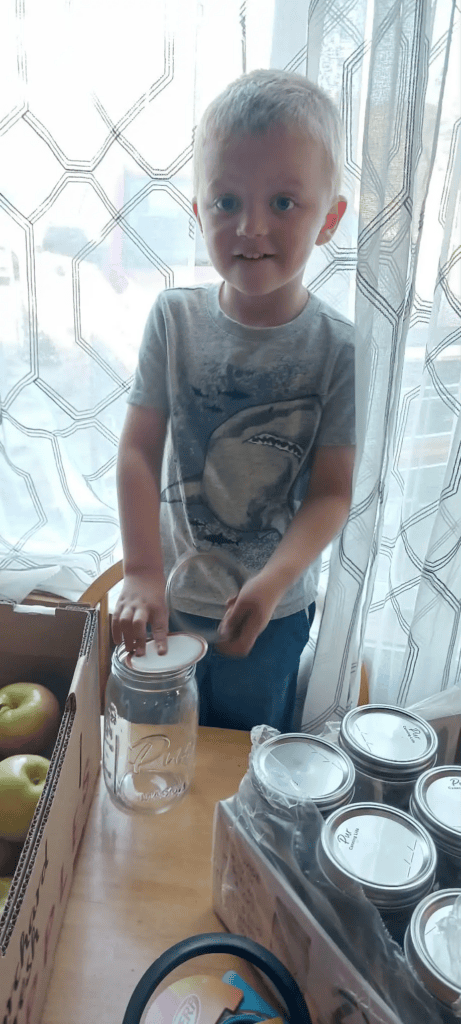
But, when the cookstove is the only ‘appliance’ in the kitchen, it can do wonders. I had a canner with a petcock indicating various weights for different foods. I set the filled jars in an inch of water in the large 7-quart canner, sealed the lid, set the canner on the hot stove and waited for steam to whistle from the little tube opening in the center. When that happened, I simply set the round petcock on the little central tube issuing steam, either at 5# or 10# (indicated on the petcock) depending on whether I was canning meat, vegetables or fruit. The petcock would hiss and juggle steadily until the canning time was up.
Of course, THIS was the most popular request.
“Grandma, can we bake a cake?”
“Sure! You go out and gather some kindling and I’ll start the mix!”
I forgot to mention that teamwork is essential for off-grid living!